What I Wish I Knew as a Freshman: A Guide to Effective Learning in College
Introduction
Your first year of college is a transformative experience—one that goes far beyond attending lectures and passing exams. For many students, freshman year marks the moment when high school study habits suddenly feel insufficient, when time management becomes genuinely challenging, and when academic success requires a fundamentally different approach. If you're sitting in your dorm room wondering why your old study methods aren't working anymore, or if you're about to start college and want to avoid common pitfalls, this student guide is for you.
The truth that many college freshmen discover too late is this: how you study matters far more than how long you study. The traditional approach of cramming the night before an exam or reading a textbook for hours simply doesn't translate to the rigorous college environment. But the good news? With the right techniques to help students learn effectively and the right mindset, you can transform your freshman year into a foundation for academic success that carries you through all four years and beyond.
In this guide, we'll explore the most effective study skills and learning techniques backed by cognitive science research, the mistakes most freshmen make, and the actionable tips and strategies you can start using immediately to excel in your classes while actually enjoying your college experience.
Understanding Why College Learning Is Different
Before diving into specific study tips, it's important to understand why the college environment demands a different approach to learning than what you likely experienced in high school.
In high school, you had structure. Teachers provided specific study guides, tests often focused on material from the most recent chapter, and your learning was broken into manageable daily increments. Your parents might have reminded you about deadlines, and teachers often gave hints about what would appear on exams.
College flips this dynamic on its head. You're expected to be self-directed. Your professors provide syllabi on day one—documents that clearly outline how much each exam, paper, or project affects your final grade—and then largely expect you to manage your own learning. Classes are fewer but more demanding. The material is deeper, more complex, and builds on itself in ways that make learning a new skill at this pace feel overwhelming without a clear strategy.
This shift requires not just a change in how much you study, but a fundamental change in your approach to study effectively. It's not about logging long hours—it's about study smarter with proven learning strategies.
Master the Science of Effective Learning
The most powerful discovery you can make as a freshman is that learning science has provided clear evidence about what actually works. These aren't theoretical concepts—they're battle-tested techniques used by high-achieving students everywhere. Understanding how to learn isn't just about memorization; it's about implementing the right study technique to help you retain the information long-term.
The Power of Spaced Repetition
Spaced repetition is perhaps the single most important study technique to master in your freshman year. Here's why: our brains naturally forget information over time if we don't reinforce it through regular review. Research shows that without review, you can forget up to 70% of new material within just 24 hours after learning it.
Spaced repetition combats this forgetting curve by spacing out your review sessions across increasingly longer intervals. Instead of studying the same material for three hours in one sitting, you review it for shorter periods across multiple days and weeks. This approach forces your brain to retrieve information from memory repeatedly, which actually strengthens the memory trace and moves knowledge into long-term storage—making it easier to retrieve when you need it. For a deeper understanding of how this works at the neurological level, check out our guide on the science of spaced repetition.
The beauty of spaced repetition is that it's not about studying more—it's about study smarter. You'll spend less total time memorizing while retaining the information far more effectively. For a college freshman drowning in coursework, this effective study method is a game-changer that can help you stay on top of your workload.
How to implement it: Start reviewing material the day after learning it, then space out subsequent reviews at 3 days, 1 week, 2 weeks, and a month. Tools like flashcard apps can automate this scheduling for you, but you can also manage it manually with a study schedule. The key is being consistent and allowing the time intervals to increase gradually.
Active Recall: The Testing Effect
Another critical study technique is active recall—the practice of quizzing yourself on material rather than passively re-reading notes or textbooks. When you force your brain to retrieve information, you're activating what scientists call the "testing effect," which strengthens your ability to recall that information later. This is one of the most powerful learning strategies available to you.
The key difference: when you re-reading a textbook, your brain feels like it's learning because the information looks familiar. This is an illusion. True active learning and effective learning happen when you have to produce the information from memory, not recognize it on a page. This is why students who spend hours reading a textbook often perform poorly on exams—they've never actually practiced retrieving the information.
When combined with spaced repetition, active recall becomes exponentially more powerful. You're not just reviewing material; you're forcing your brain to retrieve it at the exact moment you're about to forget it, making it easier to retrieve and improving your memory significantly. Want to dive deeper into these techniques? Our comprehensive guide covers 10 scientifically proven study techniques that can transform your exam performance.
How to implement it: Create practice questions, flashcards, or quiz yourself on key concepts. Cover your notes and try to explain the material aloud. Join study groups where you explain ideas to peers and they explain concepts to you. All of these activate the same retrieval mechanism that strengthens learning and helps you learn new things effectively.
Active Study: The Cornell Note-Taking Method
Your note-taking system sets the foundation for everything else. The Cornell Note-Taking Method is a structured approach to active study that transforms your notes from passive records into powerful learning tools you can use throughout the semester.
Here's how it works: divide your page into three sections. On the left, create a narrow column (about one-third of the page) for questions and cues. The right side is your main note-taking area where you capture key concepts during lectures. At the bottom, leave space for a summary.
During class, focus on the main section—write down the professor's key points, but don't try to transcribe everything. After class, use the left column to write questions that your notes answer. This process forces you to think critically about the material and understand the big picture. Later, when you review, the questions prompt active recall of the material in your notes, helping you retain the information.
This active study system works because it transforms passive note-taking into an active engagement with the material. Your notes become study tools and a study guide rather than just records of what was said. This is a proven study method used by successful students everywhere.
How to implement it: Start using this note-taking technique in your next class. You'll be amazed at how the left-column questions naturally guide your study routine and activate retrieval practice. Make adjustments as needed to fit your learning style.
Defeat the Procrastination Trap
Procrastination is arguably the biggest barrier to freshman success and good grades. It's the reason students pull all-nighters, why anxiety and stress spikes before deadlines, and why learning becomes surface-level cramming rather than deep understanding.
Here's the psychological trap: deadlines that seem far away feel abstract. A paper due in four weeks doesn't feel urgent, so you push it aside for immediate temptations. Then, suddenly, it's due in three days, panic and stress and anxiety set in, and you scramble to write something—anything—to meet the deadline. Instead of cramming, you need a better way to study.
The solution isn't willpower; it's strategy.
Break large assignments into micro-deadlines: Don't think of an essay due in four weeks as one overwhelming task. Instead, set internal deadlines: outline by day 7, first draft by day 14, revision by day 21. This transforms a distant goal into a series of manageable checkpoints that feel more urgent and real. This technique to help students stay on top of their coursework is essential.
Start with the highest-stakes work first: Look at your syllabi and identify assignments that most heavily impact your grade. Tackle those first when your energy and focus are highest. Once you've handled the big items, everything else feels easier and more manageable.
Use the Pomodoro Technique: Work in focused 25-minute intervals followed by 5-minute breaks. This prevents mental fatigue and makes starting work feel less daunting. You're not committing to three hours of studying; you're committing to one focused 25-minute block at a time. After completing several 25-minute sessions, you can take a longer break for relaxation techniques or stress management. Many students find this technique transformative for staying focused and avoiding procrastination.
By starting assignments early and breaking them into smaller time chunks, you create a buffer that eliminates last-minute panic and allows your brain to process information over time—which naturally supports spaced repetition and helps you retain the information better.
Design Your Study Space and Schedule
Your environment profoundly affects your ability to learn. A cluttered, noisy space full of distractions will tank your productivity regardless of your techniques. Creating an effective study environment is one of the most overlooked but impactful study tips.
Find your ideal study spot: This might be a quiet corner of the learning center or library, a specific desk in your dorm, or even a coffee shop (if you're not distracted by people). The key is consistency and finding a space that is free from major distractions. When you always study in the same place, your brain begins to associate that space with focus and learning. Choose an environment that's free from unnecessary noise, has good lighting, contains all the materials you need, and helps you stay focused. Turn your phone to silent or use blocking apps to help you stay engaged with your coursework rather than distracted by notifications.
Identify your peak study times: Everyone has natural rhythms of alertness and concentration. Some people are sharp early in the morning; others hit their stride in the evening. Pay attention to when you feel most focused and schedule your most challenging coursework during those times. Studying difficult material when you're mentally fatigued is far less effective than studying it when you're alert and ready to learn new concepts.
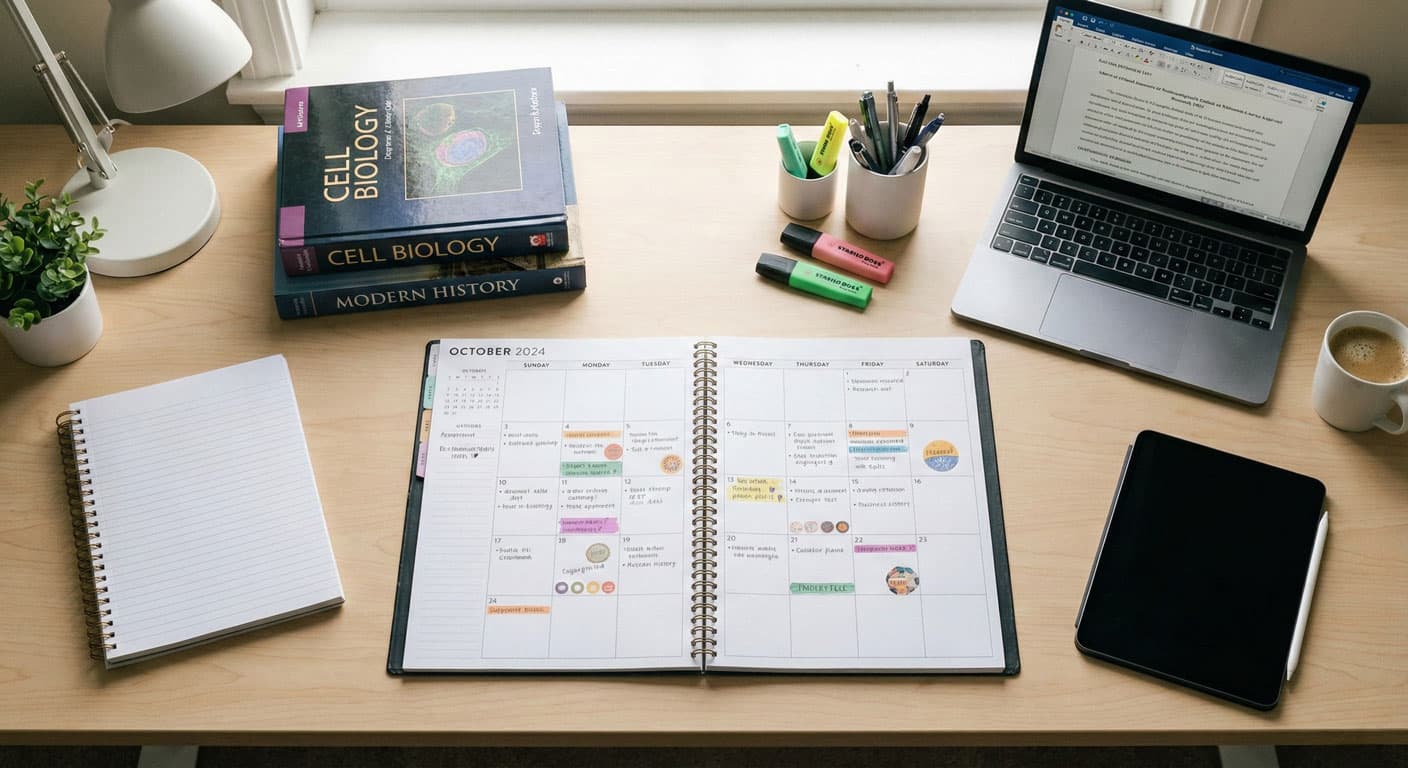
Create a structured study schedule: Use a calendar (digital or physical) to map out your entire semester. Note all deadlines, exams, and major commitments. Then create a weekly study schedule that allocates specific time blocks for each class—both attendance and study time. This isn't about rigidity; it's about ensuring you actually have dedicated learning time rather than hoping you'll find time between other commitments. Research shows that studying in specific time increments consistently helps you build strong study skills and habits early in the semester, which compounds as the year progresses. For a complete guide on building a sustainable study routine, see our article on how to create a productive study schedule.
Build in buffer time: College life is unpredictable. Someone might invite you to something fun, you might get sick, or a professor might assign an unexpected reading. Leave slack in your study plan so that unexpected events don't completely derail your academic progress.
Increase the time gradually: Start with shorter study sessions and increase the time as you build your focus capacity. This helps you stay engaged without burning out and allows you to maintain your study routine throughout the semester.
The Critical Importance of Showing Up
It sounds almost too simple, but one of the most powerful predictors of freshman success and good grades is attendance. Skipping that 8 a.m. class might seem like no big deal—you can catch up later, right? The research suggests otherwise.
When you attend class, you're not just passively absorbing information. You're exposing yourself to the material in the professor's framing, which provides crucial context and helps you see the big picture. You're also more likely to remember the information because you're engaged in the moment. Perhaps most importantly, professors often reveal subtle clues about what's important—which topics they emphasize, which concepts they revisit, what they seem excited about. These different perspectives they share often predict what will appear on exams and help you focus your study efforts.
Additionally, showing up to class signals to professors that you care about learning. This matters more than you might think. When you eventually have questions, visit office hours, or need a recommendation letter, professors remember the students who consistently show up.
Make class attendance non-negotiable. Treat it like a job commitment. Your future self—the one with good grades and acing exams—will thank you for this essential study habit.
Leverage Active Learning Techniques
The most effective study skills and powerful learning happens when you actively engage with material rather than passively consuming it. Active learning is not just buzzword—it's backed by extensive research showing superior learning outcomes.
Summarize in your own words: After reading a textbook section or attending a lecture, try to summarize the key points in your own words without looking back at your notes. This forces your brain to translate information into your own mental framework, which deepens understanding and helps you make connections between ideas. Practicing this technique to help students improve their learning is invaluable.
Form study groups strategically: Study groups are powerful, but only when structured properly. Don't just get together to socialize and call it studying. Instead, assign specific topics to different group members, have each person explain the material to the group, and quiz each other. This transforms studying into active teaching and learning from multiple perspectives. The key is choosing group members who are equally committed to academic success—not just your closest friends. A well-functioning study group can help you stay engaged and motivated throughout the semester.
Teach concepts to others: One of the best ways to understand something deeply is to try to explain the material to someone else. This is why explaining concepts to classmates, roommates, or even imaginary audiences (yes, really) is so effective. When you try to explain something and get stuck, you've identified a gap in your understanding. That's valuable information that should guide further studying. Teaching is one of the most powerful learning strategies available.
Use flashcards beyond vocabulary: While flashcards are great for learning vocabulary, they're also powerful tools for learning concepts, processes, and problem-solving. Create flashcards that ask you to explain "why" something happens, or solve sample problems, or make connections between different concepts. These active study tools help you learn new things and retain information more effectively than passive reading.
The Myth of Multi-Subject Cramming
Many students believe that studying multiple subjects in one long study session makes learning more efficient—you cover more ground, right? Actually, cognitive science research suggests otherwise. Understanding this can transform your entire approach to study effectively.
Interleaving (mixing different topics or subjects in one study session) can actually improve learning—but only when done strategically over time. The worst approach is the long study session and cramming marathon where you mix topics the night before an exam. Your brain needs time to process the connections between different concepts and move them into long-term memory.
The better way to study: focus on one subject for a week or two, then move to another subject, then come back to the first subject. This distributed, interleaved approach helps your brain develop deeper understanding of how concepts relate to each other, rather than treating each subject as a siloed unit studied in isolation the night before the exam. This study method helps you build a more comprehensive understanding of the material.
Develop Relationships With Professors
High school teachers know all their students personally. Your college professor might have 150 students in their class and honestly won't remember your name without making a special effort. This doesn't mean professors don't care—they do. But you need to be intentional about building strong study skills—including the skill of networking with faculty members.
Attend office hours: This is perhaps the most underutilized resource at your learning center or on campus. Office hours are specifically designated time when professors expect to see students. Use them. Ask clarifying questions about lecture material, discuss concepts you found interesting, or get feedback on your work before you submit it. These conversations help you stay focused on what matters most.
Participate thoughtfully in class: Make comments or ask questions occasionally (but not every single day). Professors notice engaged students who are trying to understand the material from different perspectives. When you eventually reach out to them, they're much more likely to remember you positively and be willing to help.
Communicate professionally: Use "Professor" or "Doctor" (unless told otherwise), write clearly in emails, and be respectful of their time. This basic professionalism goes a long way in building positive relationships and demonstrating your commitment to the course.
Find mentors in your field: If you're interested in a particular subject or career path, identify professors who specialize in that area and express genuine interest in their work. They can become invaluable mentors who provide guidance beyond just the classroom and help you stay on track with your learning goals.
These relationships matter not just for getting help during your freshman year, but for letters of recommendation, research opportunities, and career guidance down the line.
Take Advantage of Campus Resources
One of the most preventable mistakes freshmen make is struggling alone when campus support systems exist to help you succeed. Your college has designed resources specifically to help you retain the information and develop strong study skills.
Academic tutoring centers and learning centers: Most colleges have tutoring services—many free for students. If you're struggling with a concept or a subject, get help early rather than waiting until you're in crisis mode. Tutors can teach you study skills and techniques to help students improve their performance.
Writing centers: These resources help you improve your writing before you submit assignments. They're not just for students with weak writing—even strong writers benefit from feedback and revision. Writing center staff can help you understand how to approach different types of assignments.
Library resources: Librarians are experts at research and can help you find credible sources, navigate databases, and think critically about information. They're not just there to provide a quiet study space—they're trained to help you learn new things about research methodology.
Academic advisors: These professionals help you plan your course schedule, navigate degree requirements, and think about your academic trajectory. They can help you avoid taking unnecessary classes or missing prerequisites for important courses. They're resources to help you make smarter decisions.
Counseling services: College is stressful, and it's completely normal to feel overwhelmed sometimes. Campus counselors can provide support for academic stress, adjustment challenges, stress and anxiety, and mental health concerns. Using these services isn't a sign of weakness—it's a sign of wisdom. They often teach relaxation techniques and stress management strategies that help you stay focused on your goals.
Don't wait until you're failing a class or in crisis to use these resources. Smart students use them proactively and consistently throughout the semester.
Balance Academics and Social Engagement
College is about more than academics. Your social development, leadership growth, and personal interests matter profoundly to your overall college experience. The key is balance, not choosing one at the expense of the other.
Get involved intentionally: Join clubs, sports teams, volunteer organizations, or student government—but choose activities that genuinely interest you rather than trying to do everything. Quality over quantity. Being involved helps you stay engaged with campus life and builds connections with different perspectives and communities.
Set boundaries: When you've decided to study, actually study. Turn your phone off and create a space that is free from distractions. When you've decided to be social, actually be social. Half-hearted attempts at both waste your time and mental energy. Block out specific time for studying and protect it fiercely.
Prioritize physical health: Sleep, exercise, and nutrition aren't luxuries—they're essentials for academic performance and building strong study skills. Students who get 7+ hours of sleep perform better on exams and retain the information more effectively. Regular exercise reduces stress and improves focus. Eating balanced meals provides the energy your brain needs to learn new things. These basics form the foundation for everything else, including your ability to stay focused on your coursework.
Say no strategically: You cannot do everything. Saying yes to everything means saying a weak yes to everything. It's better to fully commit to fewer activities than to spread yourself thin across too many commitments. This helps you stay on top of your coursework and maintain good grades.
Transition Into Your First Semester: Action Steps
The first few weeks of college are crucial for setting the tone for your entire freshman year and developing habits early that will serve you throughout your college experience.
Attend the first day of class: This sets expectations, provides the syllabus, and signals to professors that you're committed. Skipping it puts you behind from the start and limits your understanding of course expectations.
Read syllabi carefully: Your professors have spent time crafting these documents because they're important. They tell you exactly how your grade will be calculated, what they expect from you, and what resources are available to help you stay focused and succeed. Reference them throughout the semester whenever you're uncertain about requirements.
Develop a study routine early: Create habits around sleep, meals, exercise, and study minutes each day. The sooner you establish routine, the sooner college life will feel normal rather than chaotic. Building strong study skills and habits early in the semester sets the foundation for long-term success.
Reach out for help early: If you're struggling with a concept in week two, that's the time to visit office hours or tutoring. Don't wait until mid-term exams to get help. Getting help early prevents small gaps from becoming major problems.
Be intentional about your social circle: In those first weeks, you'll make lots of acquaintances. Over time, closer friendships form. Look for people who support your goals and values. Remember: who you spend time with during freshman year often determines the shape of your entire college experience and whether you have people who will help you stay on track.
The Freshman Advantage: You Have Time
One thing that distinguishes freshman year from later college years is that you have specific time available. Your schedule is somewhat set; you're not juggling internships, major-specific coursework, or senior theses.
Use this to your advantage. Invest in developing excellent study skills and strong study habits now. Master spaced repetition and active recall in your first semester, and you'll use these techniques effectively for the rest of college and beyond. Build strong relationships with a few professors early on. Explore different clubs and interests to discover your community and see different perspectives. Discover your optimal study spot, study environment, and study schedule. These investments help you build a foundation for success.
The key is committing to minutes at a time of focused, effective study rather than marathon sessions. This approach helps you stay engaged and build the study discipline that serves you throughout your academic career.
Conclusion: Set Yourself Up for Success
Your freshman year is the foundation for everything that follows. The study skills you build, the relationships you develop, the resources you learn to use, the way you learn new things—these become your toolkit for navigating not just the rest of college, but your career and lifelong learning.
The most successful college students aren't necessarily the smartest—they're the ones who mastered the fundamentals of effective study: spaced repetition, active recall, strategic study planning, and consistent attendance. They're the ones who asked for help early and often. They're the ones who built strong relationships with professors and peers. They're the ones who balanced academics with self-care and social engagement and maintained good grades throughout.
As you head into (or continue) your freshman year, remember: you have all the tools you need to succeed. It's not about studying harder; it's about study smarter with powerful learning strategies and techniques to help students like you reach their full potential. Using the right study method designed to help your learning style, staying focused on your goals, and being consistent with your study routine will transform your college experience.
Your freshman year is your chance to build study habits that serve you not just in college, but throughout your life. The investment you make now in developing strong study skills and learning strategies will pay dividends for decades to come. Make it count.
Ready to make the most of your college learning and develop strong study skills? MintDeck is designed to help you master spaced repetition and active recall—two of the most powerful study techniques covered in this guide. Start building better study habits and effective learning strategies today with tools specifically designed to help you learn and retain information effectively.
Dig deeper: The science of spaced repetition · Best flashcard app for college students · MintDeck vs Quizlet · AI flashcard generator